
By
Mashiri Zvarimwa
Agricultural input subsidies are designed around a country’s specific priorities, and they are not an end in themselves. The priorities may include improving productivity, strengthening food security, supporting vulnerable farmers, improving soil health, choosing farmers eligible for support, and delivering programs.
For example, if the goal is to improve soil health, the subsidy program should reflect local conditions and pair fertilizer use with appropriate soil-health practices. If the goal is to help farmers overcome barriers to buying inputs and increase production, support could be directed toward poor or vulnerable smallholder farmers facing credit or input-market constraints. There is no single targeting model that suits every context.
Clear objectives make it easier to determine whether a program is working or not. Without a clear strategy, support may be poorly targeted or fail to address the problem it is intended to solve. A plan must be matched with a clear strategy.This means that any program aimed at increasing productivity, for instance, may fall short if its support does not address the constraints limiting production. Subsidies are only one possible tool. Their design should fit local contexts and need to be complemented by services such as extension and functioning input markets.
A more effective process therefore starts by clearly stating the national objective, then designing the subsidy around it. It is the objective that should guide the policy and the policy in turn should shape the program.
Fertilizer can help raise agricultural productivity, but it is not a stand-alone answer to poor soil health. FAO reports that decades of fertilizer subsidies and related investment in sub-Saharan Africa have had limited success in improving soil fertility and fertilizer use efficiency. It therefore recommends moving away from uniform subsidy approaches and tailoring policy to local agronomic and socioeconomic conditions. This does not mean choosing between mineral fertilizers and soil-health practices. FAO argues that productivity gains require mineral fertilizers alongside soil-health and agroecological measures. That makes information and advice an important part of the policy question.
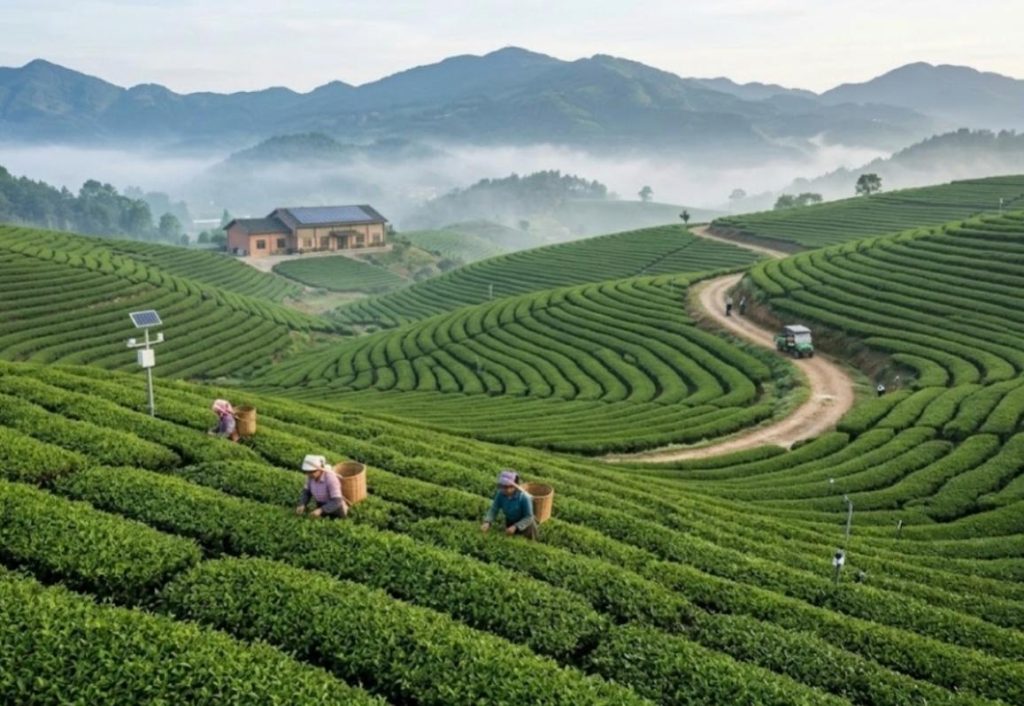
A good example is the Soil Mapping for Resilient Agrifood Systems (SoilFER) program. SoilFER links soil and crop information to locally adapted fertilizer recommendations, field trials, and extension services. Its decision support tools are intended to consider not only agronomic evidence, but also whether a recommendation is economically viable for farmers. In other words, support should help farmers judge which inputs and practices fit their land, crops, resources, and circumstances, not simply encourage them to use more fertilizer.
E-vouchers offer one way to move beyond direct distribution of a standard package. They can let farmers redeem support through participating private agro-dealers and choose from an eligible range of inputs. They provide choice, improve targeting, transparency, and private-sector participation. But choice is most useful when the eligible basket reflects local needs and is paired with soil information and agronomic advice. While the delivery mechanism can create room for better decisions, it cannot substitute for the knowledge and services that inform them.
Zambia is a prominent example of scaling an e-voucher approach to agricultural input subsidies through its Farmer Input Support Programme (FISP). The program expanded from a 17-district pilot in 2023/24 to 74 districts in 2024/25, with nationwide coverage reported for 2025/26. The system lets farmers select eligible inputs through participating agro-dealers rather than receiving a fixed package.
Digital farm registries can help governments identify and verify subsidy recipients and connect support with other services. For example, the Kenya Integrated Agriculture Management Information System (KIAMIS), illustrates how a digital farm registry can support agricultural service delivery. It enables farmer registration and is intended to facilitate targeted advisory services, access to input-subsidy programs and credit-related services. Its farmer data can also support subsidy monitoring and targeting.
In the Democratic Republic of Congo, a digital registry and e-voucher were piloted and more than 8,000 farmers registered and nearly 6,000 used the e-voucher. These examples document implementation, not proof of improved outcomes. They do not establish that digitization alone increases incomes, raises yields, or restores soil health. Those results need to be measured, and programs adjusted in response.
Registries can only support better targeting if records are reliable, farmers can correct errors, and the system reaches those intended to benefit. Strong data governance, institutional responsibility, and transparent rules should therefore be built into the program, not treated as technical afterthoughts.
Repurposing agricultural subsidy resources means redesigning support to make it better targeted, more responsive to local conditions, and more accountable for results, not withdrawing it. Support that gives farmers a choice of eligible inputs, alongside locally relevant soil information and advice, is a promising approach, though not a proven one size fits all solution.
Clear objectives, enhanced targeting criteria, reliable data and ongoing monitoring can help assess who receives support and whether it is meeting its stated aims. The goal is not to make one subsidized input solve every agricultural and soil health challenge, but to make public support more responsive to farmers’ needs and more accountable for its outcomes.