
By Jolissa Laguerre
Journalists worldwide are facing escalating legal intimidation and digital disruption, according to speakers at the 13th Gershowitz Conference on Media and Governance, a virtual gathering that examined the growing threats to press freedom in democratic societies.
Hosted by the Center for Media and Peace Initiatives (CMPI) New York, the conference—titled “Power and the Press: Courts, Billionaires, and the Battle for Media Freedom in Democracies”—brought together journalists, legal experts, academics, and international organizations to discuss how courts, wealthy elites, and emerging technologies are reshaping the media landscape.
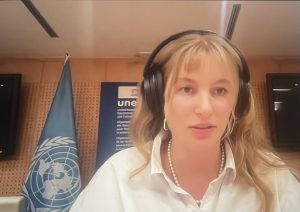
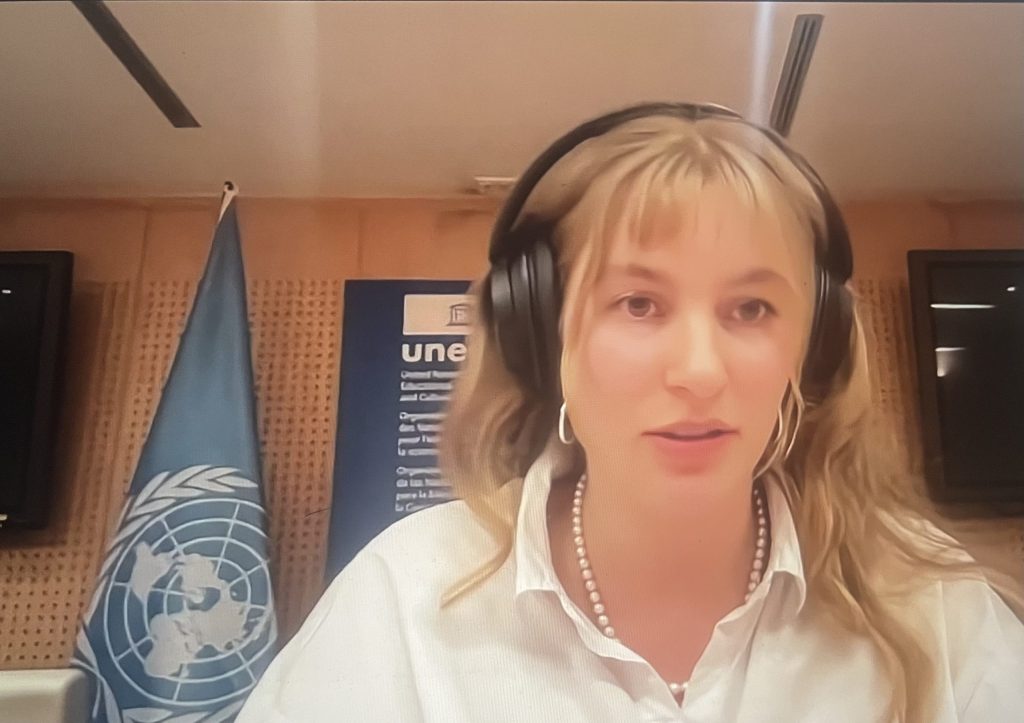
Opening the event, Dr. Uchenna Ekwo, President of CMPI, warned that journalists increasingly face legal intimidation, particularly through Strategic Lawsuits Against Public Participation (SLAPPs), which are used to silence critical reporting. Lena Fox of UNESCO’s Section for Freedom of Expression and Safety of Journalists presented findings from UNESCO’s global SLAPPs initiative, noting a rise in such cases worldwide and a lack of preparedness among legal professionals. She outlined UNESCO’s five-tiered response strategy, which includes legislative reform, judicial training, knowledge-sharing, and empowering journalists.
The impact of digital technologies and artificial intelligence (AI) on media freedom was a central theme. Professor John Pavlik of Rutgers University’s School of Communication and Informmation highlighted how declining revenues in traditional media have shifted power toward big tech companies, weakening local journalism and enabling the spread of misinformation.
While Pavlik acknowledged AI’s potential to support cross-border journalism and reduce costs, he cautioned that unchecked development, often funded by billionaires and major technology firms, could further undermine democratic discourse.
Another speaker, Washington DC-based freelance journalist, Dan Boylan, focused on the role of courts and powerful individuals in suppressing investigative journalism. He cited recent legal threats by former U.S. President Donald Trump against the BBC as an example of how defamation claims can be weaponized for political purposes. Boylan also shared personal accounts of journalists in Asia forced into exile after facing SLAPPs tied to corruption reporting.
Panel discussions extended beyond Western contexts, addressing media law and ethics in Africa, Latin America, and Asia. Speakers, including Dr. Sirajo Yakubu of Nile University in Nigeria and Chibuwala Silwaumba, a Zambian attorney-journalist, emphasized the financial and psychological toll of defamation lawsuits and the need for legal literacy, professional training, and insurance protections for media organizations.
Participants also examined misinformation, journalist safety, and digital platform governance, particularly in developing countries. UNESCO representatives detailed ongoing efforts to train judges, police officers,
and media managers, while calling for broader collaboration among journalists, civil society groups, and legal practitioners.
The conference concluded with a shared warning: without coordinated legal, technological, and institutional responses, press freedom will continue to erode. Speakers emphasized that forums like the Gershowitz Conference are critical for building global solidarity and resisting what many described as a growing trend toward digital authoritarianism.
The Gershowitz Conference is CMPI’s flagship annual lecture series, bringing together journalists, diplomats, scholars, and civil society leaders from around the world to promote dialogue and collaborative solutions to global media and governance challenges.