

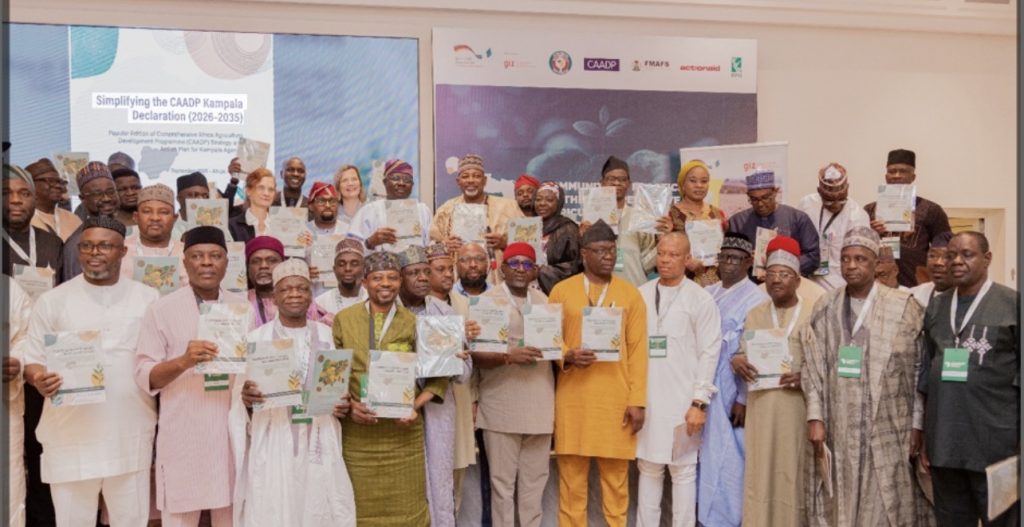
The Comprehensive Africa Agriculture Development Programme (CAADP) Kampala Declaration, a successor to the ambitious Malabo Declaration, came into force on January 1, 2026. This is a deliberate measure by Member States to renew their efforts to advance the development of resilient, inclusive, and sustainable agrifood systems in Africa. Although the Malabo Declaration demonstrated progress in areas such as finance, trade, resilience to climatic variability, and governance and accountability mechanisms, it ultimately fell short of its primary target to eradicate hunger by 2025. This is evident from the over 20% of Africa’s population (about 307 million people) that still experience hunger. The new Kampala Declaration must not only be a set of written commitments for Member States but also an opportunity for Africa to reflect on where the implementation of the previous Declaration fell short and re-strategise to ensure that Africa succeeds in its quest to fight hunger.
The efficacy of the six pledges outlined in the Kampala Declaration hinges on the political will of the African Union Member States. This necessitates intentional strategies and resource distribution to initiatives that meet these obligations, including sustainable food production, investment and financing, food and nutrition security, inclusion and livelihoods, resilient systems, and governance. Furthermore, Member States ought to domesticate the CAADP Strategy and Action Plan: 2026-2035 at the national level. This involves integrating the six commitments into national agrifood sector investment plans and budgets. This approach will ensure national ownership of the CAADP Agenda, and will facilitate the implementation, monitoring, and evaluation of progress towards fulfilling commitments efficiently.

The achievement of CAADP Kampala will ultimately hinge on whether Member States allocate sufficient resources and prioritise the agrifood sector as a pivotal sector capable of transforming Africa’s economy and alleviate poverty for millions of smallholder farmers. All stakeholders must therefore work together and make deliberate efforts that contribute towards the realisation of the CAADP Kampala Declaration, drawing lessons from the Malabo Declaration. Smallholder farmers, currently contributing about 70% to food production in Africa need the political will of leaders and policy makers in Member States to secure adequate investment and financing for this sector. Additionally, robust systems and governance structures that enhance accountability will be essential for attaining the Kampala targets by the end of 2035. The African Union Development Agency (AUDA)-NEPAD as a continental development and implementation body, utilising its convening power is mobilising Member States and other development partners to play their part in the implementation of CAADP Kampala. The time to act is now. Africa’s 307 million hungry people cannot afford another decade of broken promises. The Kampala Declaration presents an opportunity for Member States to recommit and demonstrate political will towards food security for every African, on a continent that has the land, the people, and the potential to feed not just itself, but the world at large.